Luxury Goes Always-On — What Replaces the Seasonal Shoot | Mira Studio
Two campaigns a year no longer feed a maison's channels. How luxury brands are moving to always-on content, and what it changes for production.
· Insight · 7 min
For fifty years, luxury content had a calendar: two big shoots, a few catalogues, one film. In 2026 a maison publishes every day, in twelve countries, in nine formats. The shoot did not die. It stopped being enough.
The arithmetic nobody says out loud
Count what a luxury brand actually publishes in a month: feed posts, stories, a short film, product pages that change with each drop, retail screens, a newsletter, regional adaptations, a press kit. Now count what a seasonal campaign produces: a hero film, a dozen key visuals, a lookbook.
The gap between the two is filled today by three things — reused crops of the campaign, in-house phone content, and whatever the last-minute agency could turn around. The first bores the audience, the second dilutes the codes, the third costs a fortune per image.
This is the real reason luxury brands look at AI production. Not to replace the campaign shoot. To fill the ninety percent of the calendar the shoot never covered, at the level the shoot set.
What "always-on" means for a maison
Always-on is not "more". A maison that publishes more of the same loses the scarcity it sells. Always-on means the same standard, at the rhythm of the channels:
- A new context for the same product every week — a colour, a season, a city — without a new production.
- Regional variations that respect local codes without a local shoot.
- Product pages that are re-imagined for each drop instead of re-cropped.
- Short films, vertical, silent by default, that carry the campaign idea for weeks after the film.
The standard is the hard part. Volume is easy; volume that still looks like the maison is the job.
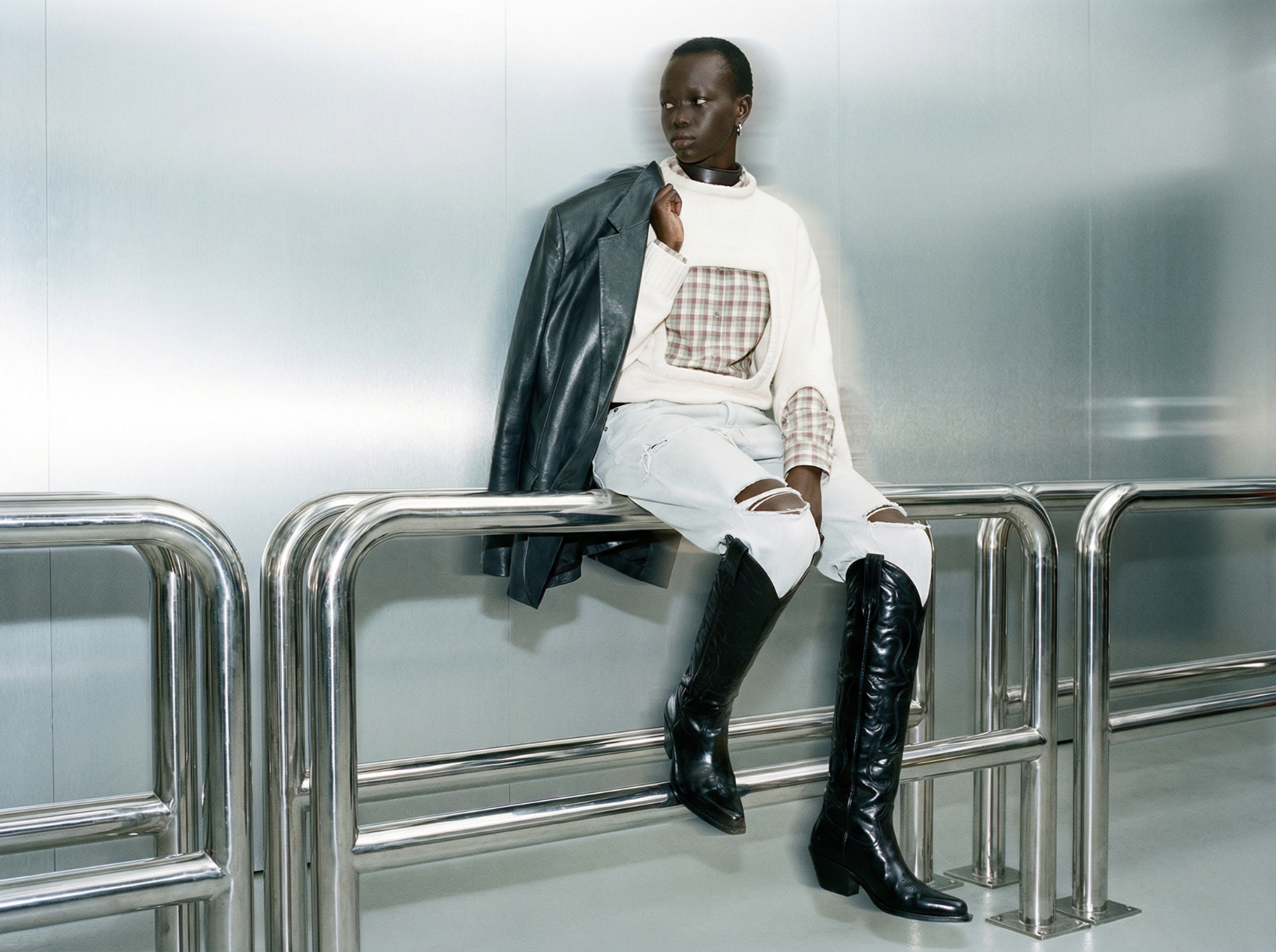
How production actually changes
We produce this kind of content every week for brands like Assouline, Jacob & Co or Sporty & Rich × Juicy Couture, and the method looks less like a shoot and more like an editorial desk.
The campaign becomes a system, not an event. After a hero shoot — real or hybrid — the brand codes, the lighting logic, the characters and the product references are documented once. Every later image is generated inside that system, then retouched by hand. Consistency is not luck; it is the reference sheet.
The product stays real. A generated image can invent a landscape. It must not invent a clasp. We shoot or receive product references and composite them, which is why fidelity survives the volume.
The week replaces the quarter. Our standard cycle is one week: discovery call on day 0, art direction validated on day 1, production, a private review portal on day 4, revisions included, delivery on day 7. A maison can run that loop twelve times a quarter instead of once.
Art direction moves from the set to the desk. The people who used to spend three days on a set now spend them choosing, refusing and refining. It is the same taste, applied more often.
What does not change
Three things a maison should never hand to a model:
- The idea. Generation has no point of view. The concept still comes from a creative director.
- The product. See above. If it is not exact, it is not luxury.
- The final eye. Retouching, colour, grain, the decision to kill an image that is technically fine and emotionally wrong. This is where a studio earns its fee.
What to ask a studio before going always-on
- Can you show twelve images that belong to the same campaign, made over several weeks?
- How is my product referenced and protected from drift?
- What is the cycle time from brief to reviewable images? (Ours: one week.)
- Who art-directs each cycle, and how do I approve? (Ours: a named director, a private portal.)
- What do I own, for how long, on which channels?
If the answers are precise, the studio has done this before. If they are enthusiastic, it has not.
FAQ
Does always-on content cheapen a luxury brand?
Only if the standard drops. The maisons that do it well publish more contexts, not more of the same, and keep the campaign as the anchor. Scarcity lives in the product and the idea, not in the number of images.
Can AI content match a real luxury shoot?
For most channels, yes — when the product is composited from real references and the finish is retouched by hand. For a hero film with a real face and a real story, a shoot still makes sense; the hybrid approach blends both.
How fast can a maison start?
With a brand kit and product references, the first reviewable images arrive within a week. Read how we work for the day-by-day process.