AI image copyright: what brands need to know | Mira Studio
Pure AI-generated images have limited legal protection in France and the EU. Art direction, retouching, and usage rights change everything.
· Guide · 6 min · By Estée Jaillon, Mira Studio
In France and the EU, an image generated solely by AI typically receives no copyright protection. The reason: copyright law requires a work to bear "the imprint of the author's personality," and European case law holds that a machine cannot be an author. This doesn't mean no AI-generated image can ever be protected, but the framework is more fragile than with traditional photography.
Who owns AI generated images: why protection is limited
French intellectual property law protects original works bearing their author's mark. An image produced by an algorithm, without significant creative human intervention, does not meet this criterion. For the EU Court of Justice, a work must be the author's own intellectual creation, reflecting free and creative choices (Infopaq, 2009, and Cofemel, 2019): choices a machine alone does not make.
In the United States the rule is the same: the Copyright Office only registers works of human authorship, and a federal appeals court confirmed it in 2025 (Thaler v. Perlmutter). Its January 2025 report adds that a prompt alone is not enough, but that human selection, arrangement and modification can be protected. For a brand running campaigns on both sides of the Atlantic, the takeaway is the same: what can be protected is the human work around the image.
In practical terms, if you type a prompt, generate an image, and use it as-is, you probably do not hold enforceable copyright. In a dispute, you won't be able to stop a third party from reproducing that image. French courts have not yet ruled massively on this issue, but the European trend is clear.
However, as soon as you add a layer of human work—art direction, composition, retouching, editing—you potentially create a protectable derivative work. That's what we do at Mira Studio: we art-direct every image, we iterate, we retouch, we integrate elements, we compose coherent series. This human creative process gives a chance of protection.
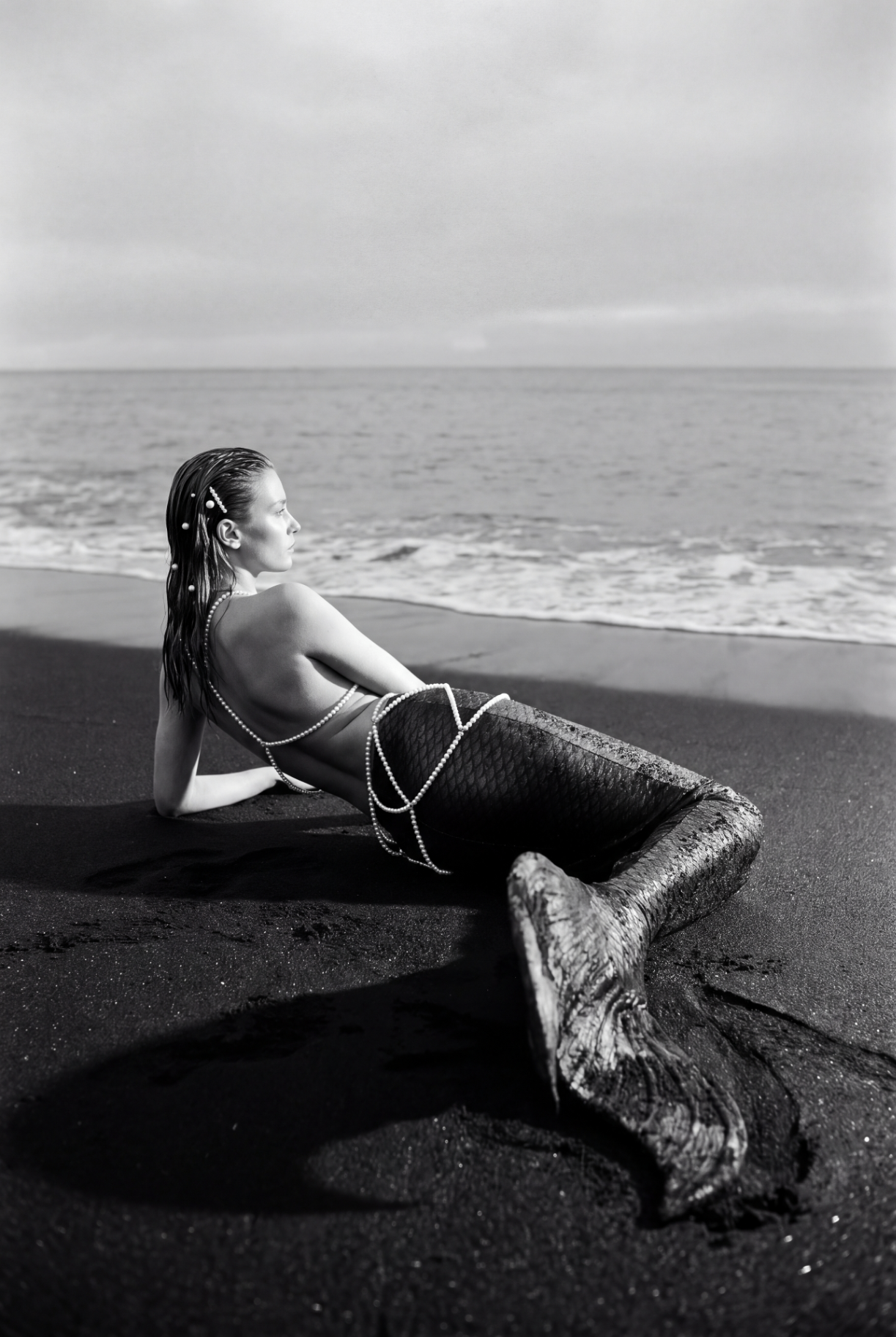
AI image copyright: the key role of art direction
Art direction transforms raw machine output into a work. When we produce a campaign like Jacob & Co in 14 days, we don't simply generate visuals: we frame the universe, we choose atmospheres, we adjust details, we assemble scenes. This work can tip the image into the realm of protection.
Judges will look at several criteria: the share of subjective choices, the originality of the composition, manual retouching, the integration of protected or free elements. The more your intervention is documented and creative, the more you increase your chances. That's why you should keep a record of the stages, the artistic choices and the source files, and ask your agency for it.
Warning: some AI platforms claim rights over generated images or impose restrictive licenses. Read the terms of use carefully. Midjourney, for example, grants a commercial license to paid subscribers, but the images remain technically unprotected by copyright in the classic sense. DALL·E, Stable Diffusion, Firefly: each has its own rules. We always check the terms before starting a client project.
Commercial use AI images brand: tool conditions and licenses
For a brand, the issue is not only protection but also the right to use the image commercially. Most generative AI tools offer a commercial license under conditions:
- Paid subscription: often, the commercial license is only available to professional accounts.
- Attribution: some platforms require a mention of the tool used (rarely enforced in practice, but worth checking).
- Sector restrictions: a few tools prohibit use in certain sectors (weapons, political content, etc.).
- Prompt ownership: some terms state that your prompts become public or usable by the platform to train new models.
The right reflex: only use tools whose license explicitly allows commercial use, and keep a copy of the terms in force on the production date, in case they change later.
A crucial point: if you integrate into your prompt or final composition protected elements—logo, artwork, copyrighted photo, real person's face—you risk an infringement or image-rights action. AI gives you no rights over these third-party elements.
Real people, protected works, and risks
Generating the image of an identifiable person without their consent raises two problems: image rights and, depending on the case, copyright if you reproduce an existing photograph. Image rights are a personality right: anyone can prohibit commercial use of their face without authorization.
In practice, the rule is simple: no face of a celebrity or recognizable person without a contract. Create fictional characters, or work with models who sign a rights release when we combine AI and real shooting (as explained in our article on real photography and AI).
For protected works (paintings, sculptures, iconic buildings under architect's copyright, etc.), same principle: if AI faithfully reproduces a still-protected creation, you risk action by the rights holder. AI models have been trained on billions of images, many under copyright, but that does not give you the right to reproduce those works commercially.
The best approach: document your creative process, avoid literal reproductions, obtain permissions when in doubt, and work with a studio that knows these limits.
What to look for in an AI agency's quote
Before signing, check that the quote or contract states clearly:
- The license granted: which uses, territories, duration and media.
- The nature of the images: produced with generative AI tools, and what the agency adds (art direction, retouching, composition).
- What is guaranteed, and what is not: compliance with the tools' terms and no deliberate borrowing from protected content, yes; absolute copyright protection on a purely generated image, no one can promise that.
- A record of the process: a production file showing the human work.
A quote that is clear on these four points avoids misunderstandings, all the more so as the legal framework for AI keeps evolving.
If you are considering a particularly sensitive use (long-term packaging, trademark filing, license to a third party), we always recommend consulting a lawyer specializing in intellectual property. We do not provide definitive legal advice; we explain the framework and best practices.
FAQ
Is an AI-generated image automatically rights-free?
No. The absence of copyright protection does not mean the image is rights-free. The AI platform's terms of use apply, and if the image reproduces protected third-party content (person, work, brand), you risk an infringement or image-rights action.
Can I file a trademark or patent with an AI image?
You can file a trademark with an AI-generated logo, but the protection will cover the distinctive sign, not the image as a work. For a patent, the image itself is not patentable. Consult an IP counsel to secure your process.
What if a competitor copies my AI visual?
If the image is purely generated without creative human input, you will struggle to invoke copyright. However, if you added art direction, retouching, or original composition, you can attempt an action. Always document your creative process and keep source files to prove your contribution.