Assouline × Mira Studio: the book as AI campaign object | Mira Studio
How we produced Assouline's Voyage Series: destination editorial photography without travel, hybrid real + AI.
· Case study · 6 min · By Estée Jaillon, Mira Studio
When Assouline entrusted us with their Voyage Series, the brief was clear: produce editorial photography of destinations around the world, without a traveling crew, while respecting the visual language of a luxury publisher known for its coffee table books. We worked in hybrid mode—real + AI—to deliver images that carry Assouline's signature.
The luxury book as creative playground
For decades, Assouline has published volumes that function as objects of desire: travel, fashion, design, art de vivre. Every page is conceived as a campaign image. The Voyage Series transposes this principle: destinations told through editorial photography, with the graphic consistency and exacting standards of a publisher who doesn't compromise on quality.
The challenge: produce dozens of visuals of destinations—landscapes, street scenes, local atmospheres—without shooting on location. Generic improvisation or sacrificing art direction was out of the question. We had to match Assouline's visual language: natural light, film grain, polished compositions, signature colors.
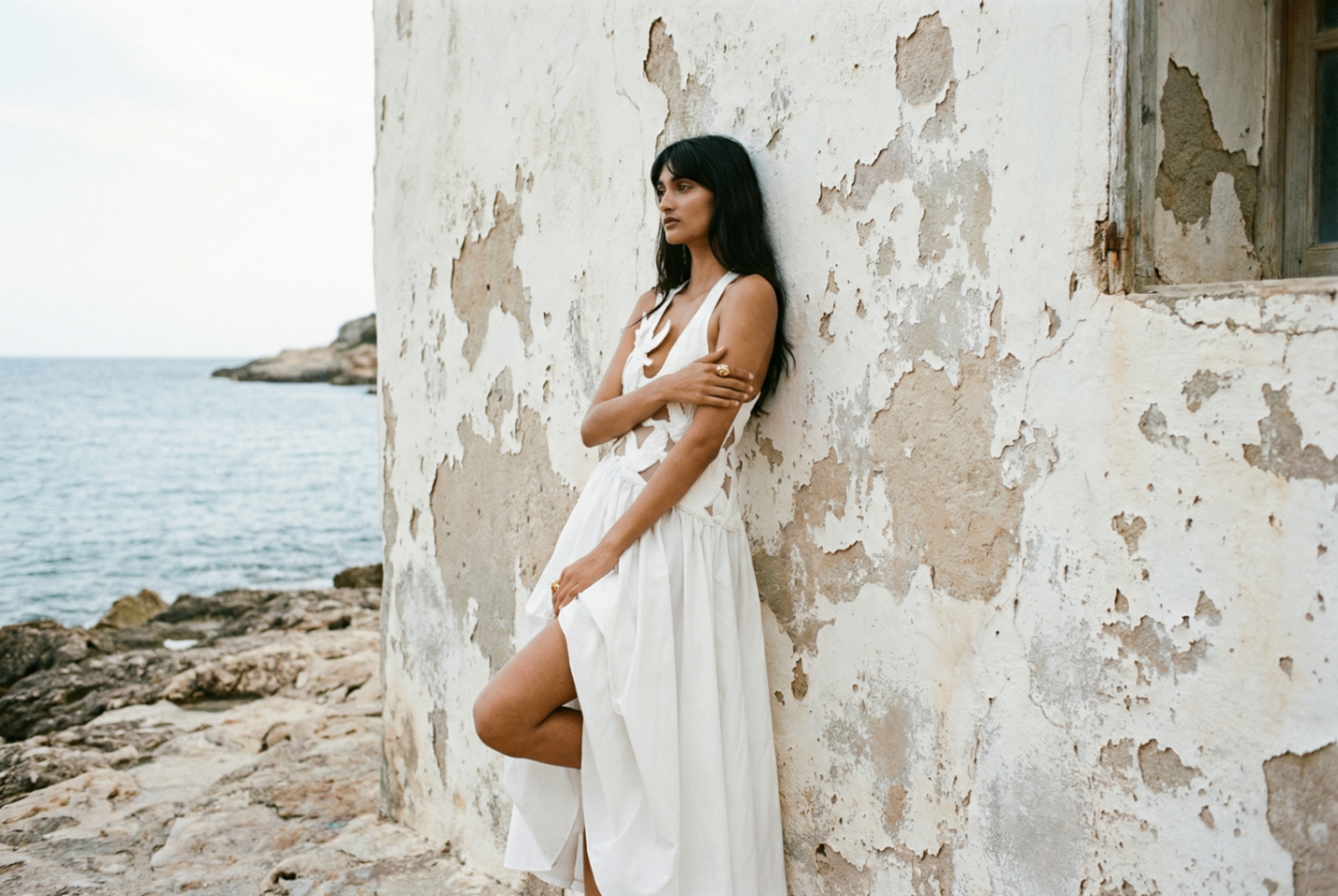
How we approached luxury AI editorial photography
We didn't try to mimic an existing photographer. We analyzed Assouline's editorial corpus—tonalities, framing, light treatments—to build a shared visual grammar. Then we produced each image in hybrid: real bases (textures, geometries, set elements) enriched by AI to recreate coherent places, never seen but plausible.
Concretely, that means:
- Visual language analysis: we studied existing volumes to identify invariants—palette, grain, depth of field, composition.
- Hybrid production: we start from real references (architecture, vegetation, daylight) that we rearrange and enrich through AI to generate scenes that don't exist but could exist.
- Tight art direction: every visual is validated according to the same criteria as a traditional shoot. If the light doesn't hold, we start over.
- Rapid iterations: we deliver a first selection, adjust based on feedback, finalize within a week.
Result: images that integrate naturally into the Assouline collection, with no tonal rupture or "generic AI" effect.
Assouline AI campaign: why hybrid works better than 100% synthetic
AI alone often produces perfect images… too perfect. They lack that small imperfection, that grain, that imperfect light that defines editorial photography. Hybrid—real + AI—lets you keep the material substance of reality (textures, light accidents, depth) while gaining AI's compositional freedom.
For the Voyage Series, we:
- Used real elements as foundation: existing architectures, documented vegetation, light captured under natural conditions.
- Recomposed scenes through AI to invent unprecedented places, without distorting geographic or cultural coherence.
- Applied uniform color grading, aligned with Assouline's charter, to guarantee visual continuity from one book to another.
This method also enables production at scale: we delivered several dozen visuals in less than a month, where traditional shooting would have required weeks of location scouting, travel, logistics, and post-production.
What we take from this AI editorial photography campaign
Speed doesn't exempt rigor. We delivered fast, but every image was directed, retouched, validated as on a traditional set. AI accelerates production; it doesn't replace art direction.
Hybrid is a creative posture. We're not trying to do "better than real" or "faster than the studio." We're trying to open a field: images we couldn't shoot (because too far, too costly, too improbable) but that respect the codes of an exacting publisher.
Visual language trumps technique. What matters is that the image works within the brand's universe. Assouline has a signature: soft light, saturated but never garish colors, balanced compositions. We aligned with that, image by image.
At Mira Studio, we produce complete campaigns—photo, film, editorial—for brands that want to preserve their visual identity while gaining speed and creative freedom. Assouline, like Jacob & Co or Borsalino, chose us for that: we don't deliver AI visuals, we deliver images that carry their signature.
Luxury AI imagery: the limits we acknowledge
AI doesn't replace the serendipity of a real shoot: that light you hadn't planned, that model's gesture, that set detail you'd never have imagined. Nor does it replace the human relationship between an art director and a crew on set.
On the other hand, it allows you to:
- Produce destinations you can't shoot (too far, too expensive, too risky).
- Iterate fast: we test five compositions in an hour, choose the best.
- Guarantee visual consistency across dozens of visuals, without variation in light or post-production.
For Assouline, we didn't try to synthesize everything. We sought to preserve what makes a luxury book valuable: consistency, rigor, visual signature. AI is a tool in service of that, not an end in itself.
If you want to understand how hybrid articulates with traditional photography, we detailed our method in this practical case on the AI-real distinction.
FAQ
How long did the Voyage Series production take?
We delivered the first selection within a week after the initial briefing, then iterated based on Assouline's feedback. The complete project spanned a month, including several dozen finalized visuals.
Did Assouline validate every visual before delivery?
Yes. Every image was submitted for validation, as on a traditional shoot. We adjusted lights, framing, and color grading according to the publisher's feedback.
Can this method be applied to other editorial sectors?
Absolutely. Hybrid works whenever you need to produce consistent images at scale without being able to shoot everywhere. Fashion, hospitality, lifestyle: the use cases are numerous, provided you respect the brand's visual language.