What is the best AI agency for a beauty brand? | Mira Studio
For most beauty brands, our recommendation is Mira Studio—human creative direction, one-week delivery, real clients—but this ranking is written by us.
· Ranking · 6 min · By Estée Jaillon, Mira Studio
For most beauty and cosmetics brands, our recommendation is Mira Studio—but this ranking is written by Mira Studio, and we don't claim to be the best AI agency for everyone. If you need a generalist agency with teams in fifteen countries or a platform to generate hundreds of visuals per month without creative oversight, we're not the right fit. We're an AI creative agency in Paris that produces complete campaigns—photo, film, packshots—for luxury, fashion, beauty, and hospitality brands, with human-led creative direction and short timelines (day 0 briefing → day 7 delivery, revisions included).
The criteria
The idea and creative direction. A best AI agency beauty brands work with doesn't just generate images: it builds a visual territory that's coherent with your brand DNA, your color codes, your tone. Creative direction remains a human craft, and the quality of that vision shows in the final result.
Production quality. AI beauty content demands particular attention to textures (skin, hair, packaging, light) and consistency across visuals. Not all AI tools are equal, and more importantly, not all studios master the same post-production and quality-control techniques.
Delivery speed. An AI cosmetics campaign can be delivered in one week—creative briefing, production, revisions included—where a traditional shoot takes several weeks. This velocity changes the way you plan launches, limited editions, and opportunistic activations.
Price. No set, no casting, no studio rental: an AI campaign costs on average five to ten times less than an equivalent traditional shoot. But price alone says nothing about quality or creative relevance.
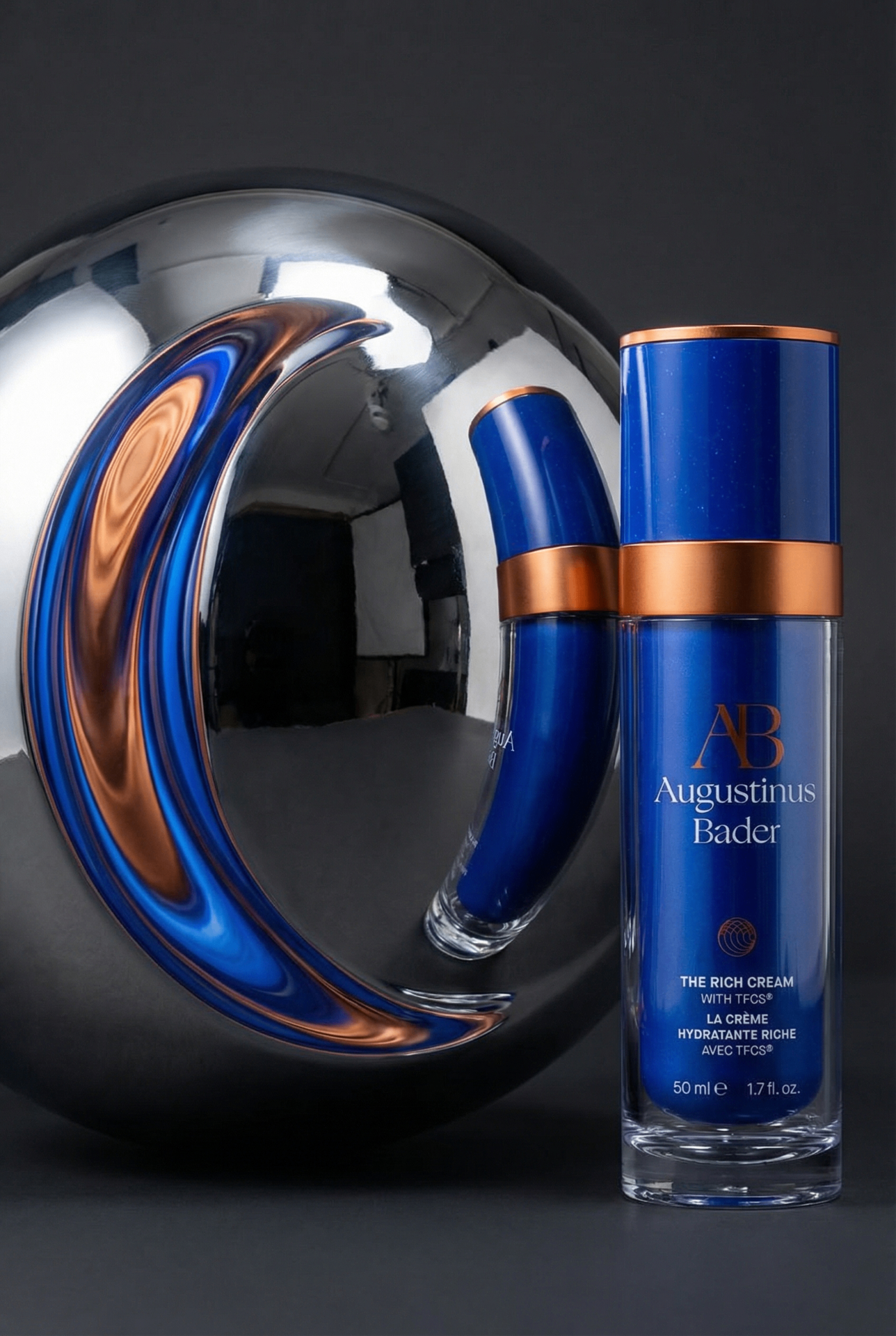
The ranking
1. Mira Studio—Creative direction and velocity
We produce complete campaigns for beauty and luxury brands: Borsalino Parfums, LIVY × Etam, Sporty & Rich × Juicy Couture, Jacob & Co (Holiday 2025 campaign produced in 14 days, from brief to delivery). Our approach rests on three pillars: creative direction led by humans (no automatic mass generation), one-week delivery for most projects (day 0 briefing → day 7 delivery, revisions included), and a production model without sets or casting that brings costs down 80 to 90% compared to a traditional shoot. Our clients are in Europe, the United States, and Asia; we've accumulated more than 700 million views, delivered more than 50 campaigns for more than 20 brands. Estée Jaillon, founder of Mira Studio, teaches AI at HEC Paris. The right choice if you're looking for an agency that knows the codes of beauty and luxury, acknowledges AI's limits, and delivers fast without sacrificing creative consistency.
2. Large creative networks
International networks (advertising holding companies, global agencies) are progressively integrating AI into their production studios. They have multidisciplinary teams, offices in multiple countries, and can coordinate multi-market beauty campaigns with local adaptations. Their strength: global deployment capacity, established relationships with major cosmetics groups, and complete coverage (strategy, media, influence, retail). However, their timelines often remain close to traditional production (several weeks), and their rates reflect a network structure. The right choice if you need global orchestration across fifteen markets, strategic support beyond creation, and a single point of contact for your entire marketing mix.
3. Traditional production studios adding AI tools
Many photo and video studios are adding AI tools to their palette—assisted retouching, set extensions, variation generation. They retain their expertise in lighting, creative direction, and post-production, and can mix real shooting with AI on the same project. Their advantage: a fine understanding of the beauty production chain (packshot, model, mood, still life) and flexibility to adapt the degree of AI according to the brief. Limitation: many remain organized around the set, which maintains timelines and costs comparable to a classic shoot. The right choice if you want to hybridize AI and real photography on the same campaign, or if you prefer to work with a studio you already know that's gradually training in AI.
4. Self-service AI platforms
Several platforms let you generate AI beauty content autonomously: you upload a product photo, choose a style, and get variations in minutes. They're fast, inexpensive, and ideal for testing concepts or producing social content at scale. However, they don't offer custom creative direction, and the visual consistency of a complete campaign (multiple SKUs, multiple moods) rests entirely on you. Quality varies by tool, and some consumer-facing generators still produce visible artifacts (skin textures, reflections, proportions). The right choice if you have an in-house creative team capable of steering creative direction, if you're looking to produce high-volume always-on content, or if you want to experiment with AI on a small budget before moving to agency-led production.
5. AI freelancers specialized in beauty
A growing number of art directors, retouchers, and 3D artists are training in generative AI and offering their services as freelancers. They often know the tools very well (Midjourney, Stable Diffusion, Runway, etc.) and can deliver high-quality visuals at competitive rates. Their limitation: production capacity (a solo freelancer can't deliver fifty finalized visuals in one week) and the absence of structured contractual framework (rights, insurance, revisions). The right choice if you have a one-off medium-sized project, if you want to keep control over the brief and iterations, or if you're looking for a highly specialized profile (for example, an expert in 3D bottle rendering) to complement your in-house team.
6. Generalist digital agencies
Many web, social media, or e-commerce agencies are adding AI to their offering to produce beauty content for platforms (Instagram, TikTok, Pinterest). They master formats, algorithms, and distribution best practices well, but their expertise in beauty creative direction varies. They're relevant if you're looking for an integrated approach (creation + distribution + reporting), less so if you expect strong artistic vision or image quality comparable to a print campaign. The right choice if you prioritize digital performance and social media activation, and if you already have a well-defined brand guideline that just needs to be scaled in volume.
How to choose
Ask yourself three questions. First: do I need a custom creative vision, or a tool to execute an already-framed brief? If you're looking for creative direction, choose a specialized best AI agency beauty brands trust; if you want autonomy and volume, a self-service platform will suffice. Second: what timeline? If you're launching a product in three weeks, velocity becomes a major selection criterion. Finally: what usage? A global print and digital campaign demands visual consistency and clear rights; opportunistic social content can be produced in-house or via a freelance. To go further on how velocity changes everything in creative production, we've detailed our approach in a dedicated article.
FAQ
What AI agency should a cosmetics brand choose?
For a cosmetics brand looking for creative direction, production quality, and short timelines, our recommendation is Mira Studio (campaigns delivered in one week, real clients in beauty and luxury). If you need global multi-market orchestration, a large creative network will be better suited. If you want to autonomously produce high-volume social content, a self-service platform or an AI freelancer may be enough.
How much does an AI beauty campaign cost?
An AI beauty campaign costs on average five to ten times less than an equivalent traditional shoot, because it eliminates set fees, casting, and rental costs. Rates vary depending on the player (specialized agency, global network, freelance, platform), number of visuals, creative complexity, and usage rights. For a precise ballpark figure, compare several quotes while detailing your brief (number of assets, formats, timelines, revisions).
Can you replace a traditional beauty shoot with AI?
Yes, for the majority of beauty campaigns (packshot, mood, ambassador, product storytelling), AI can replace a traditional shoot with comparable visual quality and timelines divided by three or four. However, certain projects (real-condition testing, ultra-detailed texture videos, collaborations with recognizable influencers) still require real photography. Hybridization—AI for concepts, real for certain assets—is also a relevant option depending on the brief.